Smart Manufacturing in 2026: How Hyperconverged Infrastructure Enables Industry 4.0 Efficiency
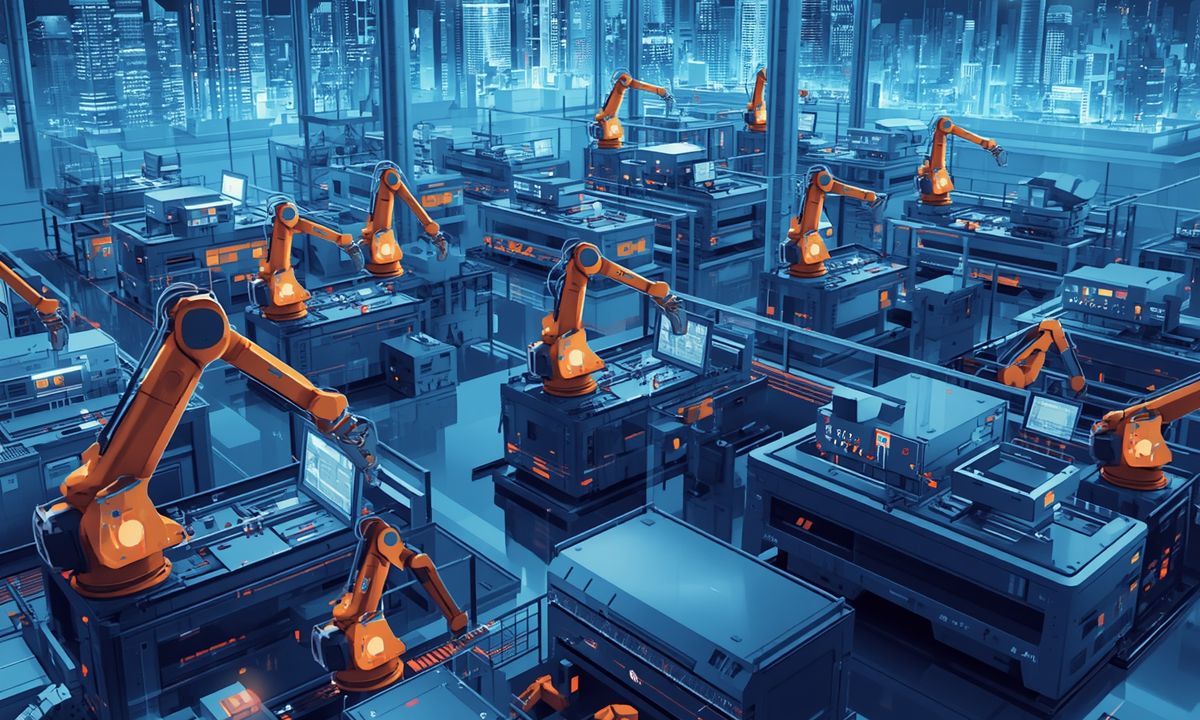
Walk into any modern manufacturing unit today, and the shift in how things operate is impossible to ignore. Machines do a lot more now; they talk, calculate, respond in real time, and production lines behave like synchronised systems.
That shift, quietly but decisively, is being powered by infrastructure decisions most people never see.
In 2026, the conversation around Industry 4.0 feels less theoretical, with the real question now being, “How efficiently do manufacturers digitise?” This is where HCI use cases for manufacturing become a practical discussion, and where providers like Sangfor have been steadily building relevance.
The Infrastructure Problem Nobody Talks About
Manufacturing innovation is generally framed around robotics, AI, or IoT. But whenever we scratch the surface, we see that legacy infrastructure struggles to keep up with the density and speed of modern data loads.
This is aggravated by systems that work in silos and allow latency to creep in.
Worse, with so many issues, maintenance becomes an operational burden.
The backend becomes more complicated with each new machine: traditional three-tier setups were never designed for this scale of convergence, and they fracture under pressure when real-time decision-making becomes unavoidable.
This gap explains why conversations around hyperconverged infrastructure keep surfacing as a necessity. To clarify, as compute, storage, and networking no longer operate independently, they converge into a single, software-defined layer.
Why Does HCI Make Sense in Manufacturing Environments?
Think about a factory floor that relies heavily on predictive maintenance: sensors constantly stream operational data from machines, which needs to be processed instantly to prevent failures. In such cases, a delay of even a few seconds can impact output, or worse, safety.
HCI simplifies that entire flow, as instead of routing data across fragmented systems, everything is processed within a unified framework. This leads to less latency, fewer failure points, and better scalability.
Some practical benefits tend to stand out, which are:
- Centralised management across distributed factory environments
- Faster deployment of new production applications
- Built-in redundancy for critical manufacturing operations
- Reduced dependency on specialised IT maintenance
These improvements directly translate into production uptime and cost moderation.
Real HCI Use Cases for Manufacturing that Teams Are Prioritising
This is where theory starts to transition into application.
When manufacturers evaluate HCI seriously, a few use cases repeatedly come up.
- Smart Production Line Optimisation
Production lines today generate massive data streams. With HCI, that information can be processed closer to the source for immediate optimisation. So, instead of analysing performance later, adjustments happen in real time.
- Edge Computing Integration
Factories rarely operate from a single location; multiple plants, warehouses, and edge nodes require synchronisation. HCI supports seamless edge deployments while maintaining central control. This means that manufacturers get consistency without sacrificing local responsiveness.
- Disaster Recovery and Data Continuity
Downtime in manufacturing is not measured in hours but in financial impact per minute. To solve this, HCI creates built-in replication and recovery mechanisms that ensure operations bounce back quickly when disruptions occur.
- Virtual Desktop Infrastructure for Factory Operations
Operators and engineers often need secure access to applications across locations, and HCI supports virtual environments that enable centralised, secure access. This reflects how HCI use cases for manufacturing are evolving; it’s less about infrastructure efficiency and more about operational resilience.
Why are manufacturers moving away from traditional infrastructure?
Manufacturers are moving away from traditional setups primarily due to scalability and speed limitations. With Sangfor solutions, HCI simplifies deployment and reduces system complexity, enabling manufacturers to respond faster to operational demands without redesigning their infrastructure.
The Role of Hypervisors in Modern Manufacturing IT
Another layer to this conversation that doesn’t get enough attention is virtualisation. More specifically, the ongoing debate around Type 1 vs Type 2 Hypervisor environments.
Type 1 hypervisors operate directly on hardware, making them better suited for mission-critical environments, whereas Type 2 hypervisors are more flexible but introduce an additional software layer that can increase latency.
Sangfor’s approach prioritises lean architecture and minimal overhead, aligning closely with the needs of high-performance manufacturing. After all, choosing the right hypervisor setup becomes part of a broader efficiency strategy rather than just a technical decision.
How does virtualisation impact factory performance?
Virtualisation improves flexibility, but poor implementation can slow systems down. Sangfor optimises this balance by integrating efficient hypervisor capabilities into its HCI platform. This enables manufacturers to maintain performance and scalability without trade-offs.
Industry Validation and Market Reality
When it comes to claims made by vendors holding up to real-world scrutiny and scenarios, nothing is more reassuring than great reviews on well-known peer-review platforms.
Date: May 13, 2026
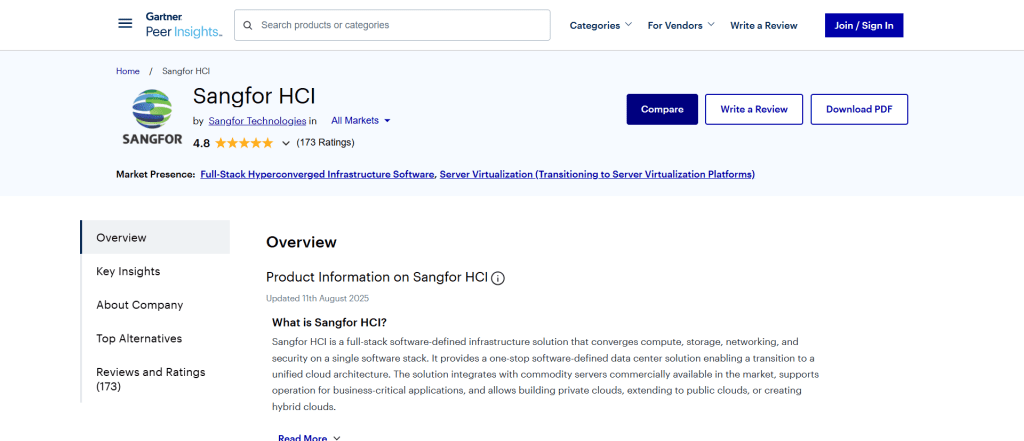
Gartner and G2 are such platforms where users rate Sangfor highly for its HCI solution: 4.7 out of 5 on G2 and 4.8 out of 5 on Gartner for HCI implementations. This is a testament to operational outcomes across industries, which reduce uncertainty for those looking to invest in long-term infrastructure transitions.
An example of success was when Sangfor HCI was implemented to support PT JFE Steel Galvanising Indonesia’s Manufacturing Execution System, operating 24/7. Compute, storage, and networking were consolidated into a single platform for this, and the company achieved simplified infrastructure management.
What kind of results can manufacturers expect after adopting HCI?
Sangfor HCI solutions ensure that manufacturers experience improved uptime, faster deployment cycles, and simplified IT management. The overall production efficiency and reliability improve.
This is a Defining Year for HCI in Manufacturing
Smart manufacturing in 2026 is defined by ambition, and this depends heavily on how well underlying systems perform under pressure. With that, the rise of HCI applications in manufacturing reflects that manufacturers aren’t just adopting technology; they are choosing systems that enable them to recover more quickly and scale smarter.
Sangfor’s role in such a scenario feels less like that of a vendor and more like that of an enabler, as it quietly reshapes how infrastructure supports production.