To Mark This Year’s Children’s Day; 10 African Kids Who Rocked The World With Their Brilliant Innovative Efforts

By Henry Nzekwe  |  May 27, 2019

To whom it may concern; nine is just fine and ten is the new when.

Okay, that’s not even a thing – but maybe we could all pretend it sounds cool given that it’s probably okay for at least one day every year; that’s May 27th – International Children’s Day. Now you know the motivation behind the lame attempt to sound cool.

Well, it’s that day of the year again when children from all over the globe get to do whatever they want and get away with it (okay, just kidding, that’s definitely what Children’s Day is about).

But then, you get the idea – it’s a special day for kids all over the world; be it the adorable, little ones that reduce all you want to say to “aww,” or the mischevious little ‘Miss Smartypants’ that appears to be growing up too fast, or the downright nasty ones that you just want to give a good hiding sometimes.

There was a time when being a kid pretty much meant being on the receiving end of the affection and care of doting parents and basking in that comfort and safety up until someone says; “Hey, you’re not a kid anymore, you’re 20 now.”

There was a time when being a child implied that you didn’t get stuff done because you were made to believe that you’re just not grown up enough to get anything right. But if we’ve learnt anything from the present generation, it’s that “catching them young” really means doing remarkable exploits and working your way into global reckoning before you even got the hang of doing the collar of your shirt right.

Today’s world is awash with several young ones who are making a name for themselves in areas that would’ve probably been thought of as “out-of-their-league” before they made it their turf. And there are many others who clawed their way to the top as kids even though they may have outgrown that tag.

In commemoration of the International Day of Children, we cast the spotlight on some of the notable innovative efforts and monumental achievements recorded by African children whose exploits have been a source of pride to the continent in recent times.

William Kamkwamba (Malawi)
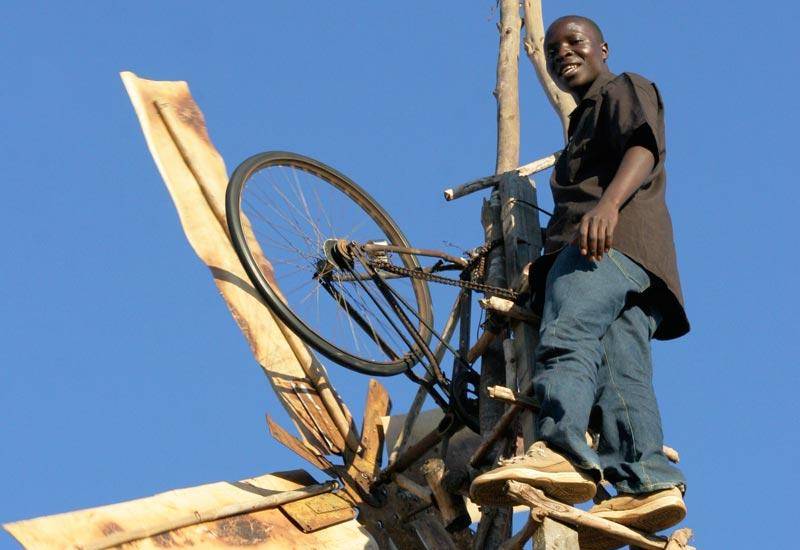
Now 31, this young Malawian innovator came to light at the age of 14 when he developed a windmill to produce electricity and water for his home. From then on, he has gone on to produce more windmills and a solar-powered water pump that supplied the first drinking water to his community.

The story of Kamkwamba is quite interesting. After he graduated from primary school, he proceeded for his secondary education. As a result of poverty, however, he was forced to drop out of school at 14.

At this point, he began borrowing books to read, and that was how he came into the generation of energy. He began with a prototype which he built using a blade, an old shock absorber, and blue gum trees. Following its success, he went on to generate electricity.

His next project was to use his invention to generate clean water, fight malaria, and provide solar power and lighting for the six homes in his family compound.

With the success of his inventions, people became interested in him and soon he was able to make it back to school. He graduated from Dartmouth College in 2014 and has published his autobiographical work; The Boy Who Harnessed the Wind, which has since been adapted into a film that was released on Netflix earlier this year.

Kelvin Doe (Sierra Leone)
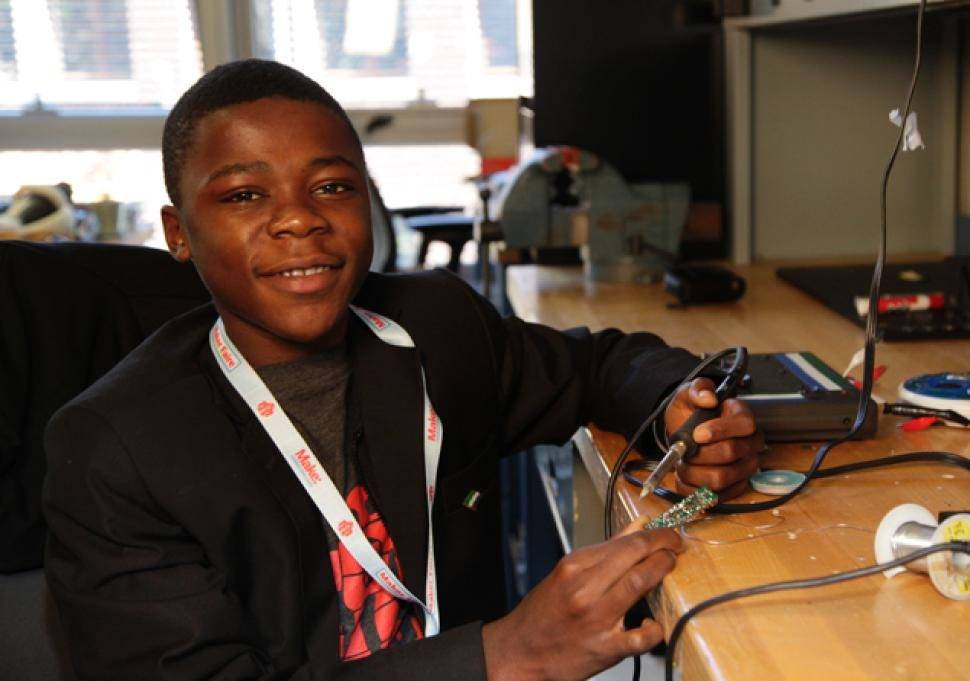
Kelvin Doe (AKA “DJ Focus”) is a Sierra Leonean self-taught engineer who built his own generator and radio transmitter at the age of 13.

At 16, he was able to build a battery that will provide electricity to homes within his community where there is no constant power supply. The battery was made from acid, soda, and metal parts scavenged from trash bins.

Kelvin’s talent was noticed by David Monina Sengeh, who encouraged him to participate in GMin’s Innovate Salone idea competition where he emerged one of the finalists.

Kevin is today the youngest person to participate in the “Visiting Practitioner’s Program” at MIT. He has also signed a USD 100 K solar project pact with Canadian High Speed Service Provider, Sierra WiFi. The little boy from Sierra Leone has met several world leaders/influential personalities around the globe and spoken at various local and international institutions/events where his visionary ideas have earned him global fame and acclaim.

Zuriel Oduwole (Nigeria)

Zuriel Elise Oduwole is a Nigerian education advocate and filmmaker best known for her works on the advocacy for the education of girls in Africa. She is of Nigerian and Mauritian descent, while also being a U.S. citizen.

Her advocacy has since made her the youngest person to be profiled by Forbes. In November 2014, at age 12, Zuriel became the world’s youngest filmmaker to have a self-produced and self-edited work after her film showed in two movie chains, and then went on to screen in Ghana, England, South Africa, and Japan.

Oduwole has met with 24 presidents and prime ministers in line with her education advocacy work. Some of these include the leaders of Jamaica, Nigeria, Kenya, Tanzania, Malawi, Liberia, South Sudan, Malta, St. Vincent & the Grenadines, Guyana and Namibia. She has also appeared in popular television stations including CNBC, Bloomberg TV, BBC, and CNN. In 2013, Oduwole was listed in the New African Magazine‘s list of “100 Most Influential People in Africa”.

Erica Armah Bra-Bulu Tandoh (Ghana)

Erica Armah Bra-Bulu Tandoh (born December 12, 2007) known by the stage name DJ Switch, is a young Ghanaian female Disk Jockey. She is a multi-talented entertainer who can also sing, rap and dance. She is the second child and the only girl among five siblings. She lives in Dadieso in the Western Region of Ghana and attends Talented Royals International School at Weija in Accra. Her career took off when she was seven years of age.

Erica Armah Bra-Bulu Tandoh rose to international fame through a mixture of her feisty attitude, online music videos and total cuteness.

She learned how to DJ roughly a year ago, in a village bar where the local DJ taught her how to use a laptop. After a couple of days learning the basics of playing on decks, “he’s teaching me what he knows and I’m teaching him what he doesn’t know,” she says.

In June 2018, Erica became the youngest person to win Ghana’s annual DJ award and three months later, she opened the Bill and Melinda Gates’ Foundation’s annual Goalkeepers event in New York, as the warm-up act to French President, Emmanuel Macron.

In May 2019, she was in New York to perform at the NGO ”Room to Read” gala with Wyclef Jean also on the bill.

Betelhem Dessie (Ethiopia)
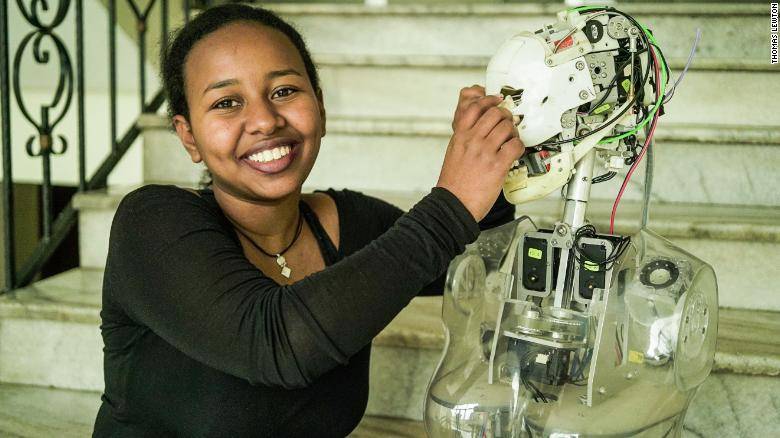
Twenty-year-old Betelhem Dessie born is an Ethiopian web and mobile technologies developer. She is currently a Founder and CEO of iCog – Anyone Can Code (ACC).

She owns four patented projects individually and an additional three in collaboration. Betelhem has been named “the youngest pioneer in Ethiopia’s fast emerging tech scene” by CNN.

Betelhem was born and raised in Harar, Ethiopia. Her career started at the age of nine. She notes that her father has been one of the biggest supporters of her ambition. Betelhem was able to become familiar with computers by using her father’s computer at his electronic shop.

In her interview with the Ethiopian digital news platform, Addis Insight, Betelhem tells a story of how she asked her father for money to celebrate her 9th birthday. Her father replied that he did not have money because he was busy with work. In response, Betelhem decided to work in his electronic shop and make the money herself.

She made money by sending customers audio and video files. After this incident, her interest in computers gained momentum. She improved her skills in video-editing, computer maintenance, and installing cellphone software. By the age of ten, Betelhem had started coding in HTML by herself. Alongside her regular school work, she taught basic computer skills to her classmates from school.

After moving from Harar to Addis Ababa with her parents, Betelhem was employed as a developer for the government at the age of twelve by the Ethiopian Information Network Security Agency (INSA) from 2011 to 2012. As of 2018, she was studying Software Engineering at the University of Addis Ababa while juggling several other coding projects.

Stacy Owino, Cynthia Otieno, Purity Achieng, Mascrine Atieno, Ivy Akinyi (Kenya)
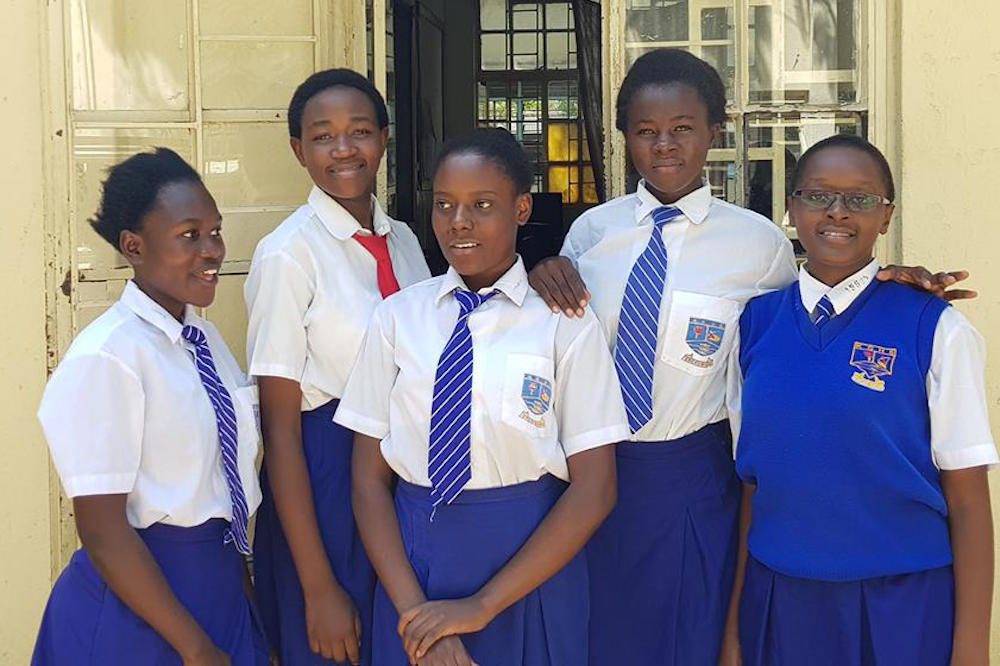
It was around August 2017 when five teenage girls from Kisumu, Kenya, took everyone by surprise by beating the massive odds that were stacked against them and becoming Africa’s sole representative at the finals of the Technovation Challenge which took place in California that year; being the only African team whose app was accepted into the challenge sponsored by Google, Verizon, and the United Nations.

A group of Kenyan schoolgirls aged between 15 to 17 created an app called i-Cut to help girls affected by Female Genital Mutilation (FGM).

The students; Stacy Owino, Cynthia Otieno, Purity Achieng, Mascrine Atieno and Ivy Akinyi, are better known as ‘The Restorers’, and they were the only Africans that participated in the 2017 Technovation Challenge in Silicon Valley which took place in August 2017..

The app is designed to offer help by connecting affected girls to legal and medical assistance. Girls who are forced to undergo the procedure can also alert local authorities by pressing a panic button on the app.

The Restorers may not have gone all the way to clinch the grand prize at that year’s Technovation World Pitch Summit, but they sure won over many hearts in their bid to proffer a lasting solution to a social ill. They may not have gotten the laurels, but they certainly deserved all the accolades and global acclaim that accompanied the buzz their app created.

Ayesha Salle, Brittany Bull, Bhanekazi Tandwa, Sesam Mngqengqiswa (South Africa)
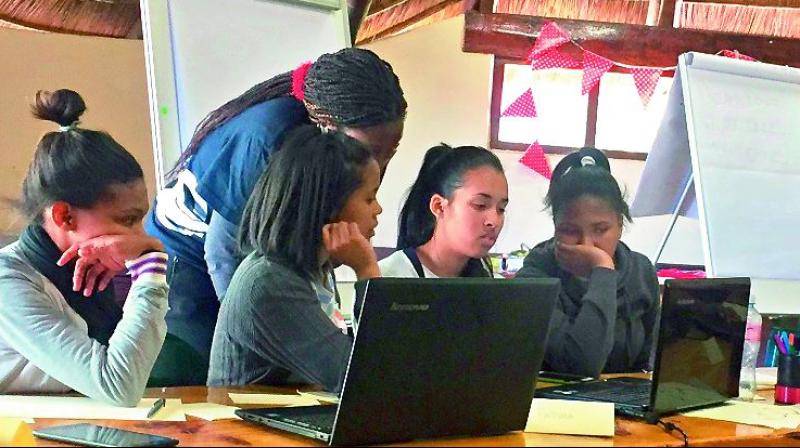
Those aren’t random names. They are part of a group of 14 South African high school girls who are looking to scribble their names on the scrolls of history by taking on something of an extraterrestrial expedition.

These are not your typical schoolgirls with perhaps those ‘Cheerleader’ and ‘Prom Queen’ ambitions that we tend to see in some of those Hollywood movies. With their target being the launch of Africa’s first private satellite into space this year, they have their sights trained on a bullseye in outer space.

The girls, who are students of various high schools in Cape Town, South Africa, took on a project which involved designing and building payloads for a satellite that will hover in space, orbit the earth’s poles, scan the surface of Africa, and gather/transmit data that will be useful for agriculture and food production within the continent.

The data obtained is expected to come in handy in the determination of the continent’s current position in the area of food production, as well as the prediction of future problems that may arise. Going forward, this could inform the formulation of agricultural policies that can avert the looming food and environmental crisis.

Promise Nnalue, Jessica Osita, Nwabuaku Ossai, Adaeze Onuigbo Vivian Okoye (Nigeria)

Five girls aged between 13 and 15 from Regina Pacis Secondary School Onitsha, Anambra state, Nigeria who represented Nigeria and Africa at the 2018 World Technovation Challenge in Silicon Valley, San Francisco, U.S., brought home the gold after staving off competition from teams from 115 countries at the qualifiers and 12 teams from across the globe at the finals.

The girls, who have now become Africa’s Golden Girls is made up of five brilliant girls including Promise Nnalue, Jessica Osita, Nwabuaku Ossai, Adaeze Onuigbo and Vivian Okoye.

The team, led by Uchenna Onwuamaegbu Ugwu, held their own while competing against representatives of other technological giants including the USA, Spain, Turkey, Uzbekistan and China to clinch the gold medal.

The world champions who are reported to be attracting a lot of attention in the world’s greatest technological hub won the Challenge with a mobile application called the FD-Detector which they developed to help tackle the problem of fake pharmaceutical products in Nigeria.

Under the tutelage of Uchenna Onwuamaegbu-Ugwu the CEO of Edufun Technik STEM, the Golden Girls spent five months researching and developing FD-Detector which swept through over 2000 competing applications to get to the finals in San Francisco and ultimately claim the top laurel.

Noah Walakira (Uganda)
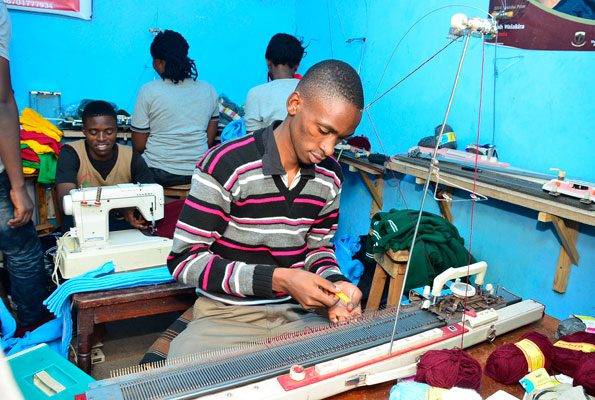
Noah Walakira spent most of his holidays at his grandma’s, but for him, it was not about listening to folktales and getting some of ‘granny’s goodies.’ Long before he was a teenager, he had made a habit of shifting base to the old woman’s quarters during school vacations, and his mission there may have been as close to “watching paint dry” as kids his age could get to when trying to describe the expression.

But the little boy saw things differently. Through those years, he was mastering a skill; one that was to pay off big time in the end, and make us use catchy lines like; “From Uganda comes the story of a young boy who got his company off the ground at 14.”

Noah Walakira had barely turned 14 when he decided to put the knitting skills he had picked up from his grandma into something profitable. Having started by knitting jerseys for schools in Kampala, he laid the foundation for the community-based organisation now known as Namirembe Sweater Makers.

The company currently manufactures various uniforms – from sportswear to ties, T-shirts, and woollen scarves – for no less than 45 schools in Uganda, as well as other institutions such as security companies and petrol stations. It also boasts clientele in countries like Rwanda, South Sudan, and Tanzania.

Employing up to 20 locales as members of its staff, Noah’s company – one he started at 14 – claims to produce as many as 500 sweaters on average monthly, with each costing around USD 7.00. Now aged 27, Noah has been able to see himself through school, together with his siblings and some of the other young employees, with parts of the business’ earnings.

Sam Kodo (Togo)
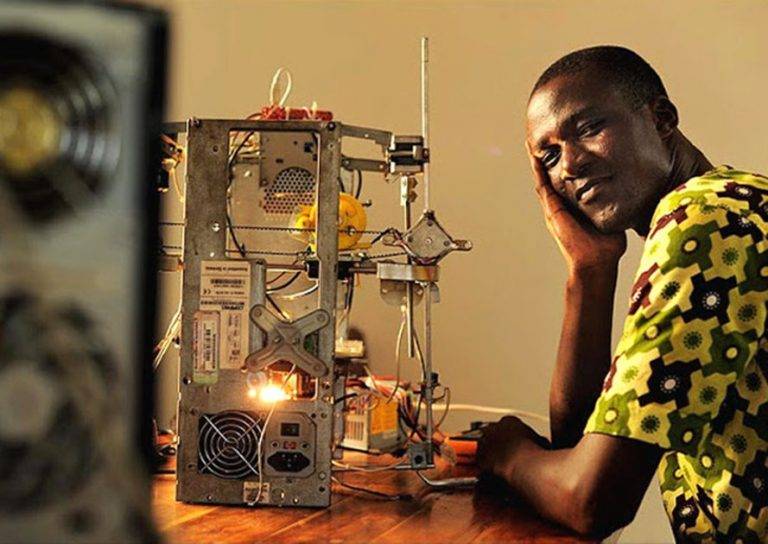
It was at the age of 7 that Sam Kodo began working on his first Robot. The advantage this scholar has was that his father was a physics lecturer at the University of Lomé. Utilizing the opportunity, he stuck around the library going through things most of us would only go through for the sake of passing exams. That led to his romance with electronics.

With the help of his parents, he got toys and old gadgets which he broke down and built back up. By the time he was fifteen, his robot could do some important things like recognize faces and objects, as well as speak and understand.

His journey took him to build smartphones and PCs which he makes through a company he founded called Infinite Loop.

The company deals in the production of low-cost personal computers for students. More so, he developed a very small PC called Lifebook PC. Because of its size, you could actually fit that into your pocket and you need to connect it to the television or phone for it to function as an internet-enabled PC.
Fixing Africa’s Supply Chains: What the Logistics Marketplace Reveals
African Supply Chain

Fixing Africa’s Supply Chains: What the Logistics Marketplace Reveals

By Partner Content  |  December 12, 2025

Africa’s logistics and supply chain sector is expanding rapidly, yet the continent continues to face persistent structural inefficiencies that undermine this growth. The broader African logistics industry is currently valued at an estimated USD 160 B, driven by rising trade volumes, rapid urbanisation, growing e-commerce activity, and significant infrastructure investments. Regional markets reflect similar momentum: West Africa’s logistics industry reached USD 45.7 B in 2024 and is projected to grow to USD 71.5 B by 2033; South Africa’s market stands at USD 64.09 B in 2025 and is expected to double to USD 113.70 B by 2035 nearly; and East Africa’s market is set to expand from USD 23.9 B in 2024 to USD 36.8 B by 2033. Weak supply chain visibility, fragmented market information, and slow procurement processes often mean that medicines, vaccines, and essential supplies fail to reach the people who need them on time. Despite the availability of capable logistics providers in many countries, health programmes, NGOs, and governments frequently struggle to identify and engage the right partners. This gap creates delays, increases transport costs, and limits the continent’s ability to respond quickly to emergencies.

In recent years, outbreaks, floods, and supply disruptions have exposed the fragility of existing systems. The challenge is not simply the absence of infrastructure but the absence of structured, transparent ways to find logistics partners and match them with operational needs. In this context, the emergence of the Logistics Marketplace—a platform funded by the Global Fund and in partnership with the Gates Foundation—signals an attempt to rethink how the continent connects logistics demand and supply. Scott Dubin, Supply Chain Private Sector Engagement Advisor at the Global Fund and the creator of the platform, outlines why the tool was needed and what it hopes to change.

Scott Dubin

The Persistent Visibility Crisis in African Logistics

Africa has logistics capacity, but it is invisible. 

For years, organisations working in health and humanitarian supply chains have faced the same obstacle: logistics capacity exists, but no one has a clear way to find it. Dubin has seen this pattern repeat across multiple countries and programmes. Governments and NGOs often rely on personal networks, outdated spreadsheets, or expensive consultants simply to answer basic questions about who operates in a region or whether they have the right equipment and experience.

He recalls spending years “knocking on doors” across different states, calling contacts, compiling lists, and creating market maps that quickly became outdated. This inefficient approach creates delays during routine delivery and becomes even more problematic during emergencies, when quick mobilisation is critical. According to Dubin, the cost of continuing with the ad-hoc processes became too high: essential programmes were slowed down not because capacity was absent, but because it was hidden.


Introducing the Logistics Marketplace

It reduces the friction that slows down health delivery by giving both sides a shared place to connect.

The Logistics Marketplace was designed as a simple, structured website where buyers and logistics providers can find each other. Providers create profiles detailing their fleet, warehouse space, cold-chain assets, licenses, and geographic coverage. Buyers—including governments, NGOs, manufacturers, distributors, and humanitarian programmes—also maintain profiles to ensure transparent communication.

For buyers, the platform replaces guesswork with structured search tools that filter providers by state, service type, or asset class. Opportunities can be posted in a standardised format, and all communication—from clarifications to document uploads—is centralised. For providers, the Marketplace serves as a visibility tool that allows them to compete more effectively, particularly in regions where they were previously overlooked.

Dubin describes it as a way to “replace friction, fragmentation, and invisible capacity with a single transparent interface.” By simplifying engagement, it reduces delays that traditionally slow down procurement and distribution.


Addressing Costly Inefficiencies in African Transport

In many African markets, logistics is far more expensive than it needs to be.

What distinguishes the Logistics Marketplace from existing platforms is its purpose and design. It is not tied to a single organisation’s supply chain, nor does it operate as a commercial platform. Instead, it is intended as a public digital good accessible to ministries, implementing partners, and logistics companies of all sizes.

Dubin explains that most supply chain tools in Africa are built by private companies for their own operations, making them inaccessible to governments or smaller transporters. None provides a shared, structured view of logistics markets. The Marketplace fills this gap by creating a common space where buyers and providers can interact transparently, without financial or administrative barriers.

This neutrality, he notes, is essential for strengthening entire markets rather than isolated supply chains.

Transport costs across African health programmes can reach 30–40 cents per dollar of goods, significantly higher than in mature markets. Dubin argues that these costs are driven less by fuel or infrastructure costs and more by inefficiencies stemming from poor visibility and weak competition.

He identifies three recurring problems:

  1. Delays in finding the right provider due to a lack of visibility.
  2. Misalignment between buyer needs and provider capabilities, often caused by outdated information.
  3. Administrative friction, with communication scattered across emails, messaging apps, and in-person meetings.

The Marketplace is designed to reduce these inefficiencies by giving buyers a clear view of real-time provider capability and centralising engagement. By improving competition and reducing discovery costs, the platform aims to lower transport costs and eliminate operational waste that weakens supply chains across the continent.


Improving Cold Chain Reliability and Reducing Vaccine Wastage

The Marketplace makes a direct difference by helping buyers see which firms have the right cold chain assets.

WHO estimates that nearly 50% of vaccines are wasted due to supply chain failures. While not all of these failures are logistical, Dubin highlights areas where logistics plays a critical role—particularly in cold chain preservation.

He points out that wastage often occurs when buyers select providers without the right cold-chain capacity or when redistribution movements cannot be arranged in time to prevent expiry. The Marketplace reduces these risks by offering structured visibility into which providers can maintain specific temperature ranges and have relevant experience with vaccines.

While the system cannot fix upstream forecasting issues, Dubin believes it can strengthen the part of the chain where logistics matters most: matching the right provider to the right job at the right moment.


Early Adoption Patterns and Country-Level Engagement

Interest is high—but onboarding requires presence.

Since its launch in July 2025, the Marketplace has attracted strong interest across countries. But Dubin says widespread adoption depends on in-country presence. In Nigeria, for example, the hiring of MEBS as the national partner rapidly accelerated uptake because it enabled direct engagement with both providers and buyers.

Organisations like VillageReach have also begun integrating the Marketplace into their work in Mozambique and the DRC, recognising its alignment with private-sector engagement efforts. Providers, meanwhile, have shown strong enthusiasm, especially when they see how visibility can translate into new operational opportunities.


What the Next Five Years Could Unlock

The Marketplace will move from being a helpful tool to becoming part of Africa’s logistics infrastructure.

Looking ahead, Dubin sees the platform shaping logistics behaviour rather than simply improving visibility. As profiles become more consistent, it will enable better planning and reveal capacity gaps. Increased competition may also encourage companies to invest in management systems and service quality.

He also notes that the Marketplace could serve as a foundation for future digital services, such as analytics, standardised contracting frameworks, and performance dashboards. Most importantly, improved visibility and faster provider activation will strengthen Africa’s ability to respond to emergencies.

If adoption continues, the platform could help unlock a more connected and resilient logistics ecosystem—one capable of supporting both routine delivery and crisis response with greater speed and reliability.

LemFi Rolls Out USD & GBP Accounts for Nigerians- Partner Content
Press Release

LemFi Rolls Out USD & GBP Accounts for Nigerians

By Partner Content  |  December 12, 2025

LemFi, the leading financial platform building innovative international payment products and solutions, today announced the launch of Global Accounts, a financial solution designed for Africa’s thriving freelance and digital economy. Starting in Nigeria, the product allows customers to open and operate real USD & GBP accounts directly on their mobile phones, on the LemFi app.

Africa’s freelance market is booming. With a vibrant, tech-savvy population and expertise spanning software development, digital marketing and creative skills, the continent’s professionals are competing and contributing on a global scale. However, a critical barrier has held them back: receiving international payments is often costly, complicated and unreliable. Payment delays, sudden account freezes, and limited platform options have forced digital workers across the continent to navigate a maze of workarounds—from asking friends abroad for help to using multiple intermediaries that eat into their hard-earned income.

LemFi’s Global Accounts product changes this reality.

Ridwan Olalere, co-founder and CEO of LemFi, said, “African freelancers are world-class. With Global Accounts, we’re giving them what they’ve always deserved: direct access to the global financial system, no more asking friends abroad for help, no more feeling left out of global moments. Global Accounts gives you a financial identity that is as global as your ambitions.”

How LemFi Global Accounts Work

Customers can open USD and GBP accounts in minutes through the LemFi app. Each account comes with local account numbers, enabling them to receive payments directly from international clients and platforms as if they were physically present in those countries.

Their held funds can be topped up and converted at competitive rates with full transparency. Customers maintain complete control, whether withdrawing to local accounts, spending globally, or holding funds in foreign currency.

Built for Africa’s Digital Workforce

For freelancers and digital entrepreneurs:

  1. Receive payments directly: Get paid by international clients
  2. No more payment delays or complicated workarounds
  3. Keep more of what you earn: transparent pricing means
  4. Built by a team serving over 2 million global customers.

LemFi’s Global Accounts was built for the generation of African professionals who want to operate in the currencies of global commerce while staying firmly rooted at home. “This is about dignity and agency,” Olalere added. “They [African Professionals] shouldn’t have to deal with or apologise for payment complications. With Global Accounts, they can focus on their craft rather than payment logistics. They have global access and local roots.”

Available Now

LemFi Global Accounts are available immediately to customers in Nigeria through the LemFi mobile app. The product supports USD & GBP accounts, with additional currencies planned for future releases.

2025 African Startup Review: Unpacking Key Trends and Events

2025 African Startup Review: Unpacking Key Trends and Events – Biggest Startup Controversies

By Emmanuel Oyedeji  |  December 12, 2025

As 2025 winds down, we continue our deep dive into the defining moments that shaped Africa’s tech and business landscape. While Part 1 centered on shutdowns and the financial realities that pushed companies over the edge, Part 2 looks inward at the controversies, breakdowns, and public crises that forced the ecosystem to confront deeper issues.

Across the year, allegations of misconduct, governance failures, financial mismanagement, and even deepfake-driven fraud shook founders, investors, regulators, and customers. This is the timeline of the controversies that defined 2025.

1. 54 Collective Liquidation: The USD 689 K Rebrand That Ended a Venture King

The 2025 controversy cycle began with a deep fracture in the ecosystem’s investment infrastructure. 54 Collective (formerly Founders Factory Africa), which once received a major grant from the Mastercard Foundation, lost its funding amid a dramatic governance dispute.

The core issue revolved around the studio’s non-profit entity, Africa Founders Ventures (AFV), which allegedly used restricted charitable grant money to fund a high-profile, non-consented corporate rebrand at the cost of approximately USD 689 K.

A forensic review uncovered over 2,000 backdated journal entries and a significant USD 4.59 M transfer from the non-profit AFV to its for-profit sibling, Founders Factory Africa.

After the Mastercard Foundation terminated the grant in January 2025, AFV attempted to invoke “business rescue.” The failure of this last-ditch effort culminated in a court-ordered liquidation in July 2025, following a review of evidence of financial mismanagement and operational failures.

The message was brutal: in the new African tech reality, even non-profit ambition cannot excuse a lack of corporate rigor.

2. The CBEX Ponzi Collapse: When AI Collides With Old School Fraud to Create The Perfect Scam

On April 17, Africa witnessed one of the most shocking fraud collapses in recent history. CBEX—an AI-powered crypto trading and investment platform heavily promoted across social media—froze withdrawals, crashed its dashboards, and immediately revealed itself as a high-tech Ponzi scheme.

The mechanics of the fraud were disturbingly sophisticated. CBEX’s marketing machine built its user base through high-production deepfake videos of Elon Musk and Johann Rupert endorsing “automated trading systems”. These videos promised returns of over 100% monthly.

A single crowd-sourced investigation tallied USD 16.5 M in reported losses from 380 victims, and that was only a fraction of the platform’s user base. Some experts believe the total exposure could cross USD 100 M once all markets are accounted for. It was a chilling illustration of how AI tools can supercharge old-school fraud.

CBEX executives initially blamed “rogue marketers,” claiming their systems were hacked and that the deepfake ads were unauthorized. But the scale and consistency of the lead-generation funnel made it clear the deception was part of the company’s core acquisition strategy.

It later doubled down, resorting to a common re-scamming tactic, telling victims it had “compensated” the lost money but demanding a “verification” fee to unlock it. CBEX didn’t just steal money; it exposed how easily desperation and next-generation AI can collide to create the perfect financial crime.

3. Union54 & ChitChat: A Founders’ Feud Goes Viral

September brought a different kind of drama, one that highlighted how fragile early-stage partnerships can be in Africa’s fast-moving startup scene.

A dispute between co-founders from Zambian fintech Union54, which had pivoted to a social commerce app called ChitChat, erupted publicly, turning what should have been private legal disagreements into a social media spectacle.

Co-founder Patrick Sikalinda filed a high-stakes lawsuit in the country’s High Court on September 9, 2025. Sikalinda alleged he was illegally removed from the company and denied a 33% equity stake, seeking a total of USD 29.1 M in compensation based on an estimated USD 20 M company valuation. The company countered that Sikalinda was merely a “short-term subcontractor” removed for non-performance.

Both sides released detailed statements online. Screenshots of internal conversations leaked, legal threats were mentioned, the feud trended across X. Supporters and critics lined up on either side, transforming the dispute into a viral one.

This viral boardroom brawl was a stark reminder of something many founders learn too late: early-stage excitement often overshadows the need for formal agreements, clearly defined roles, and documented ownership structures.

4. Thepeer’s Breakdown: USD 1.2 M Missing and Fraud Allegations

The quiet 2024 shutdown of Nigerian fintech Thepeer was dramatically revived in late 2025 when co-founder Sultan Akintunde published a detailed public account of the company’s demise.

The company, once positioned as an infrastructure bridge between fintech wallets, found itself navigating accusations around missing funds, unclear processes, and governance failures.

Akintunde’s revelations alleged that the company’s failure stemmed from “fraudulent activities and missing money” rather than market challenges, claiming the shutdown itself was an “attempt to cover the missing money”.

Specific financial discrepancies were highlighted, including the expenditure of USD 50 K on car purchases for a company that generated less than USD 1 K in annual revenue. After investigating, Akintunde calculated that roughly USD 1.2 M had gone unaccounted for.

As the third-largest shareholder, he had formally requested an audit in March 2024, which he claims prompted the other co-founders to “rush and shut down the company”. He noted that while approximately USD 500 K was eventually explained, roughly USD 700 K remained a mystery, leaving investors demanding a formal audit despite the partial return of funds.

The takeaway was a harsh lesson for the ecosystem: operational discipline is just as important as innovation. And barely a week later, the ecosystem saw what governance strain looks like at a much bigger scale.

5. M-KOPA: A Corporate Power Struggle Goes Public

Early November brought one of the year’s most unexpected controversies when internal disagreements at M-KOPA spilled into public view.

That image cracked when reports revealed a tense power struggle between senior executives and board members. Disagreements over operational control, financial reporting, and strategic direction escalated beyond internal mediation and became public knowledge.

Co-founder and former CFO Chad Larson filed a formal complaint with the Capital Markets Authority (CMA) on November 6, 2025, accusing the board and key investors of orchestrating a share buyback that “unfairly and deliberately exploits Kenyan employees”. Larson alleged the valuation used in the buyback was “artificially suppressed,” resulting in employees being offered a price representing a nearly 95% discount to the actual market value.

M-KOPA fired back, calling Larson’s claims a “campaign of misinformation” from an ex-employee who had worked for a competitor.

The saga transformed M-KOPA from an African success story into a complex case study on balancing corporate profit, local employee equity, and governance under a global spotlight.

6. Paystack Reputation Crisis: Co-Founder Olubi Fired Amid Misconduct Allegations

Paystack, a name synonymous with credibility in African fintech, was thrust into controversy after misconduct allegations involving co-founder and CTO Ezra Olubi surfaced online.

The crisis was fueled by allegations of inappropriate conduct with a subordinate, alongside the resurfacing of a cache of sexually explicit, decade-old messages from Olubi’s X (Twitter) account.

Paystack quickly suspended Olubi, but the situation escalated when they subsequently terminated Olubi’s employment on November 22, 2025, citing “significant negative reputational damage” before the formal investigation was concluded.

Olubi publicly disputed the termination, claiming it violated the terms of his suspension. Some legal experts were also in support, arguing that using a reputational-risk clause—typically intended to be forward-looking and address new conduct—to punish historic, decade-old behaviour that was public and discoverable even during the 2020 Stripe acquisition, stretched the contractual power of the company.

For Paystack, it was about perception, and all it wanted was to distance itself from all the drama. The crisis ignited intense public scrutiny, setting a critical precedent for accountability and corporate governance at senior leadership levels in the Nigerian tech

And just when it seemed the year had run out of scandal, December delivered the most staggering one yet.

7. Banxso Deepfake Trading Scandal

December delivered a scandal so large it crossed into mainstream national conversation. South Africa’s Financial Sector Conduct Authority (FSCA) issued a historic ZAR 2 B (~USD 118 M) penalty against Banxso, a trading platform whose collapse tied together two dangerous forces: deepfake-driven deception and systematic financial misconduct.

For years, Banxso had grown aggressively, sponsoring Bafana Bafana and aligning itself with UFC champion Dricus du Plessis to build legitimacy. But beneath the branding was a sophisticated but deeply unethical acquisition engine: deepfake videos of Elon Musk, Johann Rupert, and other business figures promoting automated trading systems like “Immediate Matrix.”

When the system buckled, victims across South Africa reported staggering losses. Some had lost life savings. Others attempted legal action. One investor, after losing half a million rand, filed a liquidation application against the company.

By August, the Western Cape High Court placed Banxso under provisional liquidation. In December, the FSCA delivered its final blow: a record-breaking penalty and 30-year industry bans for key executives.

The Banxso fallout was a final, damning portrait of 2025: the era of high-tech fraud had arrived, and regulators were finally responding with unprecedented force.

A Year of Controversy, Consequences, and Critical Lessons

Part 2 of the 2025 African Startup Review captures the year’s most provocative moments, moments that didn’t just make headlines but reshaped how founders, investors, regulators, and operators think about trust, governance, and transparency.

Across fintech, consumer finance, corporate governance, co-founder relations, ecosystem infrastructure, and investment networks, 2025 delivered a relentless series of controversies that forced uncomfortable but necessary conversations.

Deepfake Scandal & Misconduct Findings Fuel Collapse Of Top SA Trading Firm

By Henry Nzekwe  |  December 11, 2025

For many in South Africa, the promise arrived in a familiar, convincing form. A video of Elon Musk, or sometimes local billionaire Johann Rupert, appeared online endorsing a revolutionary new investment platform. The message was that advanced artificial intelligence could generate massive returns, turning a small deposit into life-changing wealth.

This was the gateway for hundreds of people to Banxso, an online trading platform that marketed itself as a democratising force in finance. Today, that gateway has slammed shut, sealed by a record ZAR 2 B (~USD 118 M) fine and a trail of devastation linking cutting-edge deepfake fraud to old-fashioned financial misconduct.

The Financial Sector Conduct Authority’s (FSCA)’s recently declared penalty against Banxso is the largest in South African regulatory history. It caps a catastrophic fall for a firm that, just a few years after its 2021 launch, had secured sponsorships with the national soccer team Bafana Bafana and UFC champion Dricus du Plessis to burnish its legitimacy.

The FSCA investigation found the company and its directors engaged in systematic abuse, involving misappropriating client funds, providing false information, and making unrealistic promises.

“The investigation found that Banxso and its key persons… misappropriated client funds, provided false and misleading information to clients and to the FSCA, promised clients unrealistic returns and failed to act in the best interests of its clients,” the regulator stated. The authority has now handed all evidence to the South African Police Service for a criminal investigation.

The Deepfake Pipeline

Central to Banxso’s rapid client acquisition was a network of deceptive social media and online advertisements. Investigations revealed a sophisticated lead-generation scheme. Deepfake videos of Musk, Rupert, and other tycoons promoted automated trading systems like “Immediate Matrix,” which promised monthly returns of over ZAR 300 K (~USD 17.7 K) from a ZAR 4.7 K (USD 277.79) deposit. Users who clicked were funneled directly to Banxso’s platforms, BanxsoX and AutoBanxso, to trade high-risk contracts for difference (CFDs).

Many victims reported being enrolled automatically, without clear consent. Banxso previously denied authorising these ads, even claiming its systems were hacked by a third party that inserted the leads. However, the sheer volume of victims pointed to a core business strategy. Over 380 people contacted one investigation, claiming combined losses of ZAR 280 M (~USD 16.5 M). In court papers, Banxso indicated it had around 7,000 customers, suggesting total losses could reach the billions.

One investor, who lost ZAR 500 K (~USD 29.5 K), reportedly took the drastic step of applying to court to have Banxso liquidated. Their experience was not unique. The Western Cape High Court placed Banxso under provisional liquidation in August 2025, with Judge Andre le Grange stating he was satisfied the company’s business model was itself illegal.

A Maximum Penalty

Beyond the ZAR 2 B administrative penalty on Banxso and directors Harel Adam Sekler and Warwick David Sneider, other key individuals faced massive fines. Former CEO Manuel de Andrade was fined ZAR 20 M, and others faced multi-million rand penalties. Crucially, Sekler, Sneider, De Andrade, and another key person, Mohammed Bux, were debarred from the financial services industry for 30 years each—the maximum sentence ever imposed by the FSCA.

In a simultaneous move, the regulator finalised the withdrawal of the financial services licence for Afrimarkets Capital, a platform linked to Banxso through common directorships and operating from the same Cape Town office. The FSCA found Afrimarkets guilty of near-identical misconduct. This action closed a loophole that appeared when, following initial negative reports about Banxso, a similar platform emerged under a different name.

In its response, Banxso stated it was exploring “all available mechanisms to address what we believe to be fundamental concerns with this outcome.” Afrimarkets similarly said it was “exploring all available legal options.”

The fallout continues. The FSCA has confirmed it is investigating two new platforms, Protea Markets and UMarketPro, following reports that they operate with a virtually identical model and employ many former Banxso and Afrimarkets staff. This suggests the regulatory crackdown, while historic, may be part of a longer game of whack-a-mole.

Meanwhile, resolution is far from over for the estimated thousands of clients. With Banxso under liquidation and a criminal probe underway, the path to recovering lost funds remains uncertain.

LemFi Secures 14 Money Transmitter Licenses, Strengthening its US Presence - Partner Content
Press Release

LemFi Secures 14 Money Transmitter Licenses, Strengthening its US Presence

By Partner Content  |  December 11, 2025

LemFi, the financial platform built for the underserved, has secured 14 new Money Transmitter Licenses (MTLs) across the US, marking a major step in its mission to deliver safe, reliable and fully compliant financial services to immigrant communities.

The new licenses, which are for states including Illinois, Michigan, Arizona, Oregon, and Delaware, give LemFi the ability to move money for customers directly under state regulatory oversight, giving the company more control over how transfers are processed and enabling a smoother, more transparent experience. This will strengthen LemFi’s promise to operate with clarity, accountability and customer protection at the core of its US operations.

At a time when trust matters more than ever in fintech, securing the licenses puts LemFi in the same league as the financial industry’s most established players. Its expanding MTL portfolio means LemFi can deliver a smoother, more reliable experience while collaborating more closely with state regulators and financial partners nationwide.

The US is one of the most important financial markets in the world and represents a powerful opportunity for LemFi. Home to 52 million diasporans, they represent more than 15% of the national population and mean the US is the world’s largest remittance-sending country. An estimated $93 billion in remittances was sent from the US to their families and friends in other countries in 2023 alone. LemFi’s new MTL licenses mean it is poised to reach millions more, who are seeking trusted, regulated ways to support their families abroad and manage their finances at home, adding to its two million global customer base. 

This opportunity will only grow: global remittance flows rose 4.6% between 2023 and 2024 alone, with analysts forecasting the broader market could surpass $1.5 trillion by 2033 –  underscoring the scale and long-term growth potential of immigrant financial flows, and reinforcing the need for transparent, reliable, immigrant-first financial services.

A global vision for financial inclusion

The US MTLs join LemFi’s growing portfolio of international licenses, including:

  1. An Electronic Money Institution (EMI) license in the UK (regulated by the FCA) and FCA credit license in the UK
  2. A Payment Institution (PI) license in Ireland, regulated by the Central Bank of Ireland
  3. A Money Service Business (MSB) license in Canada, regulated by the Financial Transactions and Report Analysis Centre of Canada (FINTRAC).

LemFi has also established partnerships with GCash (Philippines), UBL (Pakistan), eSewa (Nepal), and ClearBank (UK), underscoring its collaborative approach to delivering trusted financial tools worldwide. 

Janine Ross, Group Head of Compliance at LemFi, said: “Obtaining our own licenses is about trust just as much as it is compliance. Our customers depend on us for security and transparency when moving their money, and these licenses demonstrate that we’re building a financial ecosystem with regulation and customer protection at its core. This milestone allows us to serve our U.S. customers with greater autonomy and confidence. It strengthens our infrastructure, speeds up processing, and ensures our users can send and manage funds under the highest regulatory standards.”

This latest announcement continues the expansion of LemFi’s global product range, part of its roadmap to provide a full suite of financial products tailored to the needs of the underserved. This includes LemFi Credit, designed to help immigrants who traditionally struggle to access and build credit do so while also benefiting from flexible payments. LemFi’s platform can do this by recognising international credit histories and employing alternative credit assessment methods. As well, its alternative credit scoring technology powers Send Now Pay Later (SNPL), designed to enable its customers to send money to their loved ones when they need to, and access credit safely and securely.

Kenya’s Plan To Break Up Safaricom Advances Amid USD 2.4 B Deal

By Staff Reporter  |  December 10, 2025

The Kenyan government is proceeding with a plan to split telecommunications giant Safaricom into three separate units, even as it finalises a transaction to reduce its stake and cede majority control to South Africa’s Vodacom Group.

Treasury Secretary John Mbadi stated the administration wants to carve East Africa’s biggest company into a mobile-phone tower operator, a financial technology firm, and a telecommunications company, Bloomberg reports. This corporate unbundling is being discussed in parallel with a separate, pending transaction where Vodacom will acquire an additional 20% stake in Safaricom.

The share acquisition will see Vodacom purchase a 15% stake from the Government of Kenya and a 5% stake from Vodafone for a total cash consideration of USD 2.4 B, giving it a 55% controlling share.

The deal includes an advance dividend payment from Vodacom to the Kenyan government of KES 40.2 B (~USD 311 M), which the South African firm expects to recoup through future Safaricom dividend flows within two to three years. Completion of the acquisition is expected in the first quarter of 2026, subject to regulatory approvals.

The push for a split comes as Safaricom demonstrates robust financial performance. The company recently reported a 52.1% jump in group net income to KES 42.8 B (~USD 331 M) for the six months ending September 2025. Its M-PESA mobile money service, a central component of the proposed fintech unit, recorded a 14% year-on-year revenue growth in Kenya during the same period. The government’s assessment has found there would be “a huge benefit” from splitting the company, though a final plan requires cabinet approval.

Analysts and regulators have long discussed separating Safaricom’s operations, particularly the dominant M-PESA platform, which handles more than 90% of Kenya’s mobile money transactions. Proponents argue that a standalone M-PESA would fall under the direct supervision of the Central Bank of Kenya, potentially strengthening financial stability and regulatory oversight. Safaricom’s management has historically resisted a split, with CEO Peter Ndegwa arguing last year that spinning off M-PESA would not enhance shareholder value.

The proposed separation would see the telecom unit focus on voice and data, the tower business manage physical network infrastructure, and M-PESA operate as an independent financial services company. This structural change would represent a significant shift for a company that has become deeply integrated into Kenya’s economy and is also expanding aggressively in Ethiopia, where it recently reached 10 million customers despite continued hostilities.

StanChart Completes Exit From Cameroon, Hands Over To Access Bank

By Wayua Muli  |  December 9, 2025

Standard Chartered (StanChart) has finalised the divestment of its Cameroon business, successfully completing the handover of operations to Access Bank Cameroon. This move is consistent with StanChart’s broader global strategy, which was initiated in April 2022, with the announcement of the divestiture of its business from seven countries across Africa and the Middle East.

The countries StanChart has marked for divestment, besides Cameroon, are Angola, Sierra Leone, Zimbabwe, Gambia, Lebanon, and Jordan. The migration of the Cameroon business marks the second concluded sale, with Jordan (which was sold to Arab Jordan Investment Bank) concluded in 2023.

The bank’s leadership emphasised that the core objective of the divestitures was to streamline their international footprint to better serve clients in countries where the impact would be maximised. Anna Asonganyi, CEO for Standard Chartered Cameroon, commented on the transition, noting that the priority throughout the process was to ensure a smooth transfer for both staff and clients. She expressed confidence that the high standards of service and support established by StanChart would continue under Access Bank’s management.

Kariuki Ngari, Managing Director and CEO for Standard Chartered Kenya, reiterated the strategic rationale, highlighting that the decision to sell the businesses in seven markets was fundamentally about driving efficiencies and scale. He also confirmed the two institutions successfully completed the integration of their banking operations, including branches, personnel, and client portfolios, into Access Bank’s existing infrastructure, over the course of two years.

Despite the physical exit from the onshore banking market, Ngari confirmed that StanChart will maintain a presence and continue to operate as a facilitator, acting as a crucial bridge for international capital flows into Cameroon.

In the interim, the StanChart is still waiting regulatory approvals to complete their divestitures in Gambia and Sierra Leone, where Access Bank will once again take over, and Zimbabwe, where First Capital Bank is set to become its new home.

Featured Image Courtesy: International Finance Magazine

Weetracker_Travel

Morocco Emerges As A Top Global Destination Following A Major 2025 Tourism Surge

By Emmanuel Oyedeji  |  December 9, 2025

Morocco is closing out 2025 with remarkable momentum, standing among the world’s fastest-growing and most admired travel destinations as it moves into 2026, according to the Travel and Tour World magazine. 

The past year has been one of record-breaking performance, rising international visibility, and strong economic gains that have reshaped global perceptions of the kingdom.

According to the Ministry of Tourism, Morocco welcomed 17.4 million tourists in 2024, a 20% increase over the previous year and 33% above pre-pandemic levels. That momentum accelerated in 2025, when the country surpassed 18 million visitors by November, setting yet another all-time record and strengthening its global position.

According to the magazine, Morocco climbed to 13th place in the UN Tourism global classification of destinations with the strongest international expansion. At the same time, Morocco’s international reputation reached new heights when it was named Destination of the Year at the 2025 Travel Awards in Brussels.

It points to Morocco’s heritage, culture, and coastline as key reasons for its broad appeal. The country’s ability to offer variety within a single trip is one of the reasons it continues to rise in international rankings and attract travelers from a growing range of markets.

This ranking reflects the impact of years of targeted investment in infrastructure, transportation, cultural sites, and hospitality developments supported by major projects ranging from USD 100 M to over USD 1 B.

Together, these commitments have helped Morocco emerge as a leader in both Africa and the Middle East while boosting tourism revenues to USD 9.6 B in the first eight months of 2025 alone.

As these achievements stack up, Morocco’s tourism roadmap has become a core driver of both performance and stability. The national strategy, which supports major investments in hotels, airports, heritage preservation, and sustainable tourism, continues to guide development as the country targets 26 million tourists by 2030, a goal aligned with its role as co-host of the 2030 FIFA World Cup. These efforts have helped tourism maintain its position as a key pillar of the economy, contributing roughly 7% of GDP and supporting thousands of businesses across regions.

Meanwhile, the rise in global recognition is also driving economic gains. Hotels are reporting record occupancy, restaurants are experiencing higher customer volume, and small enterprises in transport, culture, crafts, and guided experiences are expanding steadily. New services, upgraded infrastructure, and a stronger hospitality sector are creating a cycle of growth that benefits both travelers and local communities.

As visitors explore Morocco, they find a country where different landscapes and cultures connect seamlessly. Historic cities such as Rabat and Fes showcase a deep artistic and intellectual heritage, while coastal areas along the Atlantic and Mediterranean offer a relaxed atmosphere for travelers seeking sun and sea. At the same time, mountain villages, desert routes, and archaeological sites such as Volubilis expand the range of experiences available, offering travelers variety without losing the coherence of a unified national identity.

This diversity—cultural, historical, and geographic—has become one of Morocco’s strongest assets. It allows the country to appeal to adventure-seekers, heritage enthusiasts, beach travelers, food lovers, and urban explorers alike, making Morocco not just a destination but a multi-layered experience that encourages repeat visits.

As Morocco enters 2026, the country appears well prepared to extend the progress achieved over the past two years. Ongoing government programs continue to emphasize responsible travel, cultural preservation, and community-focused development, ensuring that growth remains sustainable and widely shared. International visibility is rising, infrastructure is expanding, and the tourism sector is aligning itself with long-term national ambitions.

M-PESA App Blocked In Ethiopia, Intensifying Dispute Over “Unfair Competition”

By Staff Reporter  |  December 8, 2025

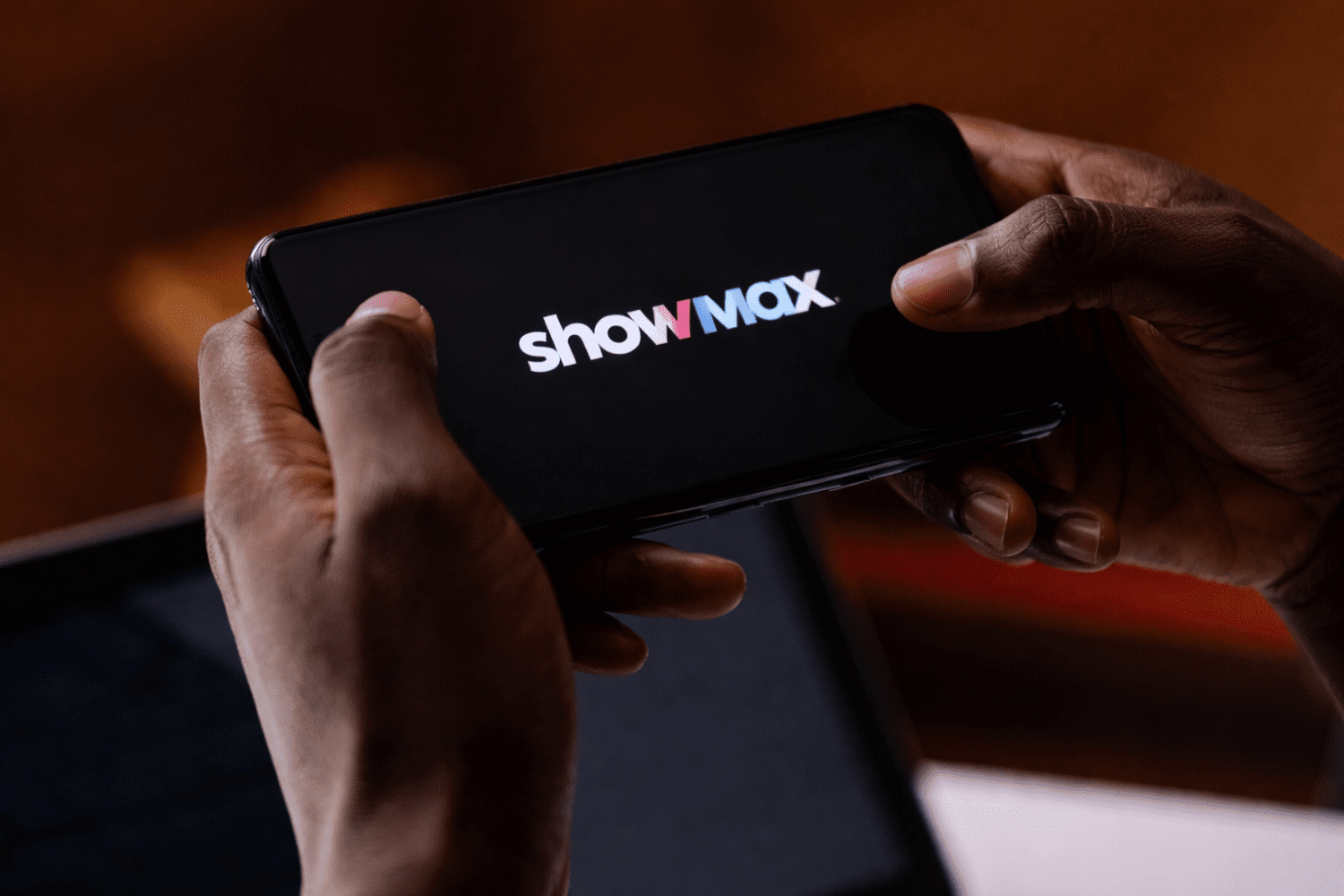
A public statement from M-PESA Ethiopia on December 5th claimed that Ethio Telecom, the state-owned incumbent, was preventing its customers from accessing the newly launched app, sparking the latest clash in a market where regulators warn the playing field is not level.

Days after launching a new mobile money application designed to work across any network, M-PESA Ethiopia has publicly accused the state-owned incumbent, Ethio Telecom, of blocking customer access to the service. The allegation marks a new flashpoint in a bitter market battle and directly echoes warnings from a recent World Bank report about anti-competitive structural advantages enjoyed by the dominant operator.

The incident raises urgent questions about the reality of Ethiopia’s telecom liberalisation, a flagship reform under Prime Minister Abiy Ahmed, and the future of foreign investment in one of Africa’s last untapped markets.

M-PESA Ethiopia, the financial services arm of Safaricom Ethiopia, launched “M-PESA Lehulm” last week. The application was designed to be telco-agnostic, meaning it could operate on smartphones using any mobile network provider, a strategic move to break from reliance on Safaricom’s own infrastructure.

However, within days, the company issued a public statement alleging that customers relying on Ethio Telecom’s mobile data services were completely unable to log in, transact, or retrieve funds through the new app. M-PESA Ethiopia stated the service had received full approval from the National Bank of Ethiopia and the Information Network Security Administration (INSA) and called on regulators to intervene.

Ethio Telecom has not issued a public response to the allegation. This incident is not isolated; the World Bank’s October 2025 Ethiopia Telecom Market Assessment explicitly cited the “alleged blocking of access to Safaricom applications, including M-PESA” as a troubling practice that undermines competition and innovation.

***

The dispute over app access is symptomatic of deeper, systemic imbalances documented by international observers. The World Bank report concluded that while liberalisation has begun, the market is “liberalised in name, but not in practice”.

A notable point of contention is the unequal starting conditions. Safaricom Ethiopia consortium paid approximately USD 1 B for its operating license. In contrast, Ethio Telecom, which has operated for decades, was not subject to a similar fee, granting it a massive initial financial advantage.

The regulator has designated Ethio Telecom as holding Significant Market Power (SMP) in six key market segments, compared to just one for Safaricom. This dominance is entrenched in infrastructure: Ethio Telecom controls the national backbone fibre network, forcing Safaricom to lease capacity at a reported cost of USD 3 M per year while also building nearly 60% of its own sites.

The report details how Ethio Telecom prices voice calls below the regulated Mobile Termination Rate (MTR). This forces Safaricom to lose money on every call its customers make to Ethio Telecom’s network, as it must match the below-cost prices to remain competitive. The World Bank estimated this practice alone was costing Safaricom up to USD 1.6 M per month.

***

The competitive landscape has exacted a heavy financial toll on the newcomer, even as it drives broader market growth.

Safaricom Ethiopia’s operation remains deeply unprofitable, reporting a service revenue of KES 6.19 B (USD 47.9 M) for the six months to September 2025—more than double the previous year—but still recording a steep negative EBIT of KES 20.2 B. These losses are amplified by a severe currency depreciation, with the Ethiopian Birr falling 16.9% against the US dollar in the last half-year.

Despite this, Safaricom is gaining customer traction. Its active customer base in Ethiopia soared 83.7% to 11.15 million, while its M-PESA active users surged approximately 175% year-on-year to 3.4 million.

Telebirr’s integration into government services and its pre-installation on devices give it a formidable, state-backed edge. Meanwhile, M-PESA is attempting to compete through innovation, such as its super-app hosting 28 mini-apps and its new Errif digital lending platform.

Observers note that the ongoing clash transcends a corporate rivalry as it serves as a litmus test for Ethiopia’s commitment to creating a transparent, competitive market for foreign direct investment.

The World Bank and other analysts warn that prolonged unfair practices and regulatory uncertainty will deter future investors. This concern appears validated; Ethiopia recently suspended the process for issuing a third telecom license after potential bidders sought improved conditions.

For Safaricom, the Ethiopia venture is a high-stakes strategic play for long-term growth, buffered by its exceptionally profitable home operations in Kenya, where half-year net income recently hit a record KES 42.8 B.

The company maintains a long-term view, planning to invest a further USD 1.5 B over three years in network expansion. But question marks remain about whether Ethiopian regulators will enforce the rules to ensure such capital continues to flow.

Feature Image Credits: Mobile World Live

Weetracker_Private_Equity_Africa

Mauritius Displaces Nigeria, Climbs To No. 1 Spot In Africa’s PE Market In The First 9 Months Of 2025

By Emmanuel Oyedeji  |  December 5, 2025

In the first nine months of 2025, Mauritius vaulted to the top spot among African private equity destinations, outpacing Nigeria even though it completed far fewer transactions.

According to data from DealMakers Africa, Mauritius recorded a total deal value of USD 1.25 B, a dramatic 311% rise from just USD 38.9 M in the same period the previous year. Meanwhile, Nigeria, despite closing 45 deals, saw its total deal value shrink sharply to USD 987.5 M from USD 3.8 B

That leap didn’t come from an increase in deal count but from a few very large transactions. In June 2025, a merger combining the diplomatic-housing businesses of Diplomatic Holdings Africa, Verdant Ventures, and Verdant Property Holdings—made official through 24.7 million Grit Real Estate shares—alone accounted for USD 839 M.

That same month, another major transaction saw Tremont Master sell a 56% stake in Alphamin Resources (approximately 718.99 million shares) to Alpha Mining in a deal worth USD 367 M. Together, these two transactions accounted for a substantial portion of Mauritius’ 2025 surge.

Mauritius’ race to the top comes as the momentum in the broader African private equity market weakens. DealMakers Africa found that deal value outside South Africa slipped 6% year-on-year to USD 6.85 B, after a 10% fall in 2024. Total deal count dropped to 259 from 282.

West Africa led the regional tables with 78 deals, thanks to Nigeria’s volume. North Africa followed with 67, most of them in Egypt, and East Africa posted 63, driven by Kenya.

General corporate finance activity took a sharper hit. There were 64 transactions worth USD 2.2 B, down from 88 deals worth USD 10.4 B in 2024. Notable transactions included Sun King’s USD 156 M securitization, the largest of its kind in sub-Saharan Africa outside South Africa. Mining dominated the top 10 list, led by Vitol’s USD 1.65 B acquisition of stakes in Côte d’Ivoire’s Baleine project and the Republic of Congo’s LNG project.

Mauritius’ Rebranding into an Economic Hub

Mauritius, once best known as an idyllic tourist destination, is now one of Africa’s most sophisticated financial hubs. Over the past few decades, the island has built a strong legal and regulatory framework, fashioned a business-friendly tax regime, and leveraged its geographical position, bridging Africa, Asia, and Europe to become a go-to gateway for capital flows across the continent. 

Today, the island-state, with only a population of 1.3 million and a GDP of USD 14.95 B in 2024 per the World Bank, hosts more than 450 private equity funds that collectively manage almost USD 40 B in assets spanning infrastructure, renewable energy, agriculture, telecoms, logistics, fintech, and financial services. That concentration of capital, expertise, and governance gives fund managers a reliable base for structuring continent-wide investments and navigating cross-border deals in volatile markets.

Moreover, Mauritius benefits from a network of bilateral investment treaties and its participation in the African Continental Free Trade Area (AfCFTA), enhancing regional integration and strengthening investor legal protection.

According to advisers like StraFin Corporate Services, structuring investments via Mauritius offers tax efficiency, simplified governance, and compliance with international standards, all major draws for global investors, family offices, and multinationals seeking Africa exposure.

Mauritius’ rise as a financial gateway sends a powerful signal about the shifting landscape in Africa’s PE. For investors and fund managers, Mauritius’s legal, regulatory, and tax infrastructure offers a secure, efficient launching pad for cross-border deployments. As a result, a handful of large transactions now carry more weight in shaping deal-value rankings than many smaller deals combined.

Overall, private equity is increasingly being seen not just as niche funding but as a reliable engine for scale, consolidation, and long-term value creation.